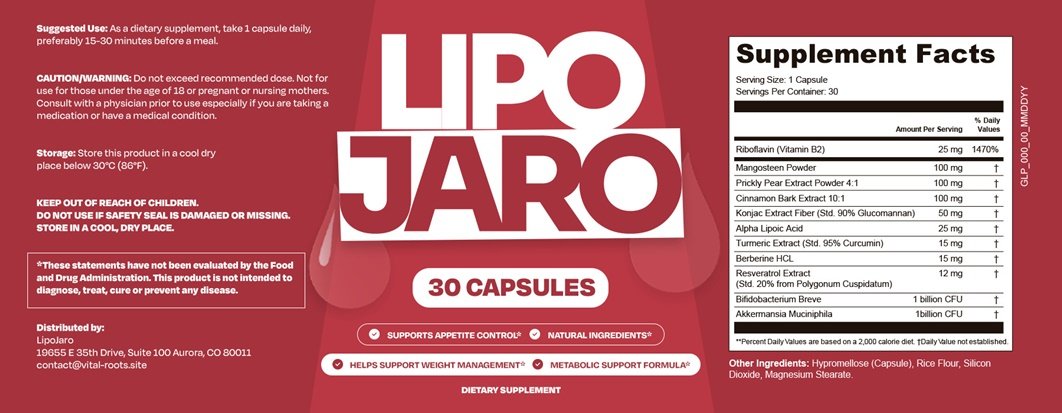
Most people glance at a Supplement Facts panel without really reading it. Here's what the numbers actually mean, and what to check before you buy.
Per-Serving Amount vs. Daily Value
The "amount per serving" tells you how much of an ingredient is in your dose. The "% Daily Value" compares that to an established reference intake — but many ingredients, including most botanical extracts, have no established daily value, shown as a dagger symbol rather than a percentage. That's normal, not a red flag.
What CFU Actually Means
For probiotics like Bifidobacterium Breve, you'll see "CFU" — colony-forming units — instead of a milligram weight. This measures live bacterial count, which is the metric that actually matters for a probiotic, not the physical weight of the powder.
Named Ingredients vs. Proprietary Blends
The single most useful check: are ingredients listed individually with their own amounts, like the LipoJaro label, or lumped into an unnamed "proprietary blend"? A named list lets you actually evaluate what you're taking against published research.
Extraction Ratios Matter Too
Labels sometimes list a ratio like "10:1" next to a botanical extract — this tells you how concentrated the extract is relative to the raw plant material, which affects potency independent of the milligram weight alone.
The "Other Ingredients" List
Don't skip this section — it covers the capsule shell and fillers, useful for checking allergen concerns even though these aren't active ingredients.